
Europe’s Heatwave Shows That Climate Adaptation Must Become Operational
Europe’s heatwave is not only a weather event. It is a governance test.
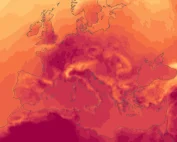
Europe’s latest heatwave has exposed a critical climate adaptation gap. The issue is not that Europe lacks climate ambition. The European Union has been a global leader in climate mitigation, emissions reduction, energy transition and long-term climate policy. The problem is different: Europe’s adaptation systems are not yet operational enough for the climate extremes already arriving.
Extreme heat is now disrupting homes, hospitals, schools, transport networks, electricity systems, workplaces and public administration. The debate is no longer theoretical. When overheating buildings, strained health systems and cooling failures enter the daily news cycle, adaptation has moved from policy language into lived public risk.
Mitigation changes tomorrow’s climate. Adaptation protects people today. Climate Command must deliver both.
This is the central lesson. Europe cannot mitigate its way out of today’s heatwave, and it cannot adapt its way out of future climate change. A mature climate agenda must do both at the same time.
Europe has strategy. The gap is operational deployment.
The EU Adaptation Strategy provides an important policy foundation. It recognises the need for climate resilience, better knowledge, smarter adaptation and stronger international action. The Commission is also developing a new European Climate Resilience and Risk Management Integrated Framework, aimed at helping Member States prevent and prepare for the growing impacts of climate change.
These frameworks matter. But during an extreme event, strategy alone does not cool a home, protect a care facility, stabilise electricity demand or identify a vulnerable household before heat becomes a medical emergency.
This is where Europe’s adaptation challenge becomes uncomfortable. The continent does not suffer from a lack of climate language. It suffers from a widening gap between strategy, commissioning, operational testing and frontline deployment.
Strategies, frameworks and consultations are necessary. But they do not by themselves answer the questions that local authorities, health services and infrastructure operators must answer during a heatwave:
- Which neighbourhoods are most exposed?
- Which buildings remain dangerously hot overnight?
- Which households have air conditioning but avoid using it because of electricity costs?
- Which elderly or medically vulnerable residents require proactive contact?
- Which hospitals, care homes, schools and transport links are most at risk?
- Which electricity nodes may come under stress as cooling demand rises?
- Which public actions should be triggered before the temperature peak arrives?
These are not abstract climate questions. They are command questions.
Heat is a public-health risk, not a lifestyle inconvenience.
The European Environment Agency has warned that Europe is the fastest-warming continent in the world and that climate risks are already threatening energy and food security, ecosystems, infrastructure, water resources, financial stability and people’s health. This is not a marginal warning. It is an institutional signal that Europe’s preparedness must accelerate.
The human cost is already well documented. A study published in Nature Medicine estimated 61,672 heat-related deaths in Europe between 30 May and 4 September 2022. The 2003 European heatwave, often remembered as a turning point in public awareness, caused around 70,000 deaths. Yet recent reporting is again asking why Europe’s heatwaves remain so deadly.
Politico has framed the current debate directly: despite the lessons of 2003, extreme heat is still killing people across Europe. The Guardian has also asked why, after decades of climate warnings, Europe remains so underprepared for rising heat.
This is the uncomfortable point. Heat mortality is not caused by temperature alone. It is shaped by housing quality, age, income, health status, electricity affordability, access to cooling, urban heat islands, social isolation and the speed at which authorities act before the emergency peaks.
The air-conditioning debate is being framed too narrowly.
The public debate around air conditioning in Europe is often too simplistic. Some portray air conditioning as environmentally irresponsible. Others present it as the only realistic answer to extreme heat. Both positions miss the larger public-policy issue.
The real question is not whether Europe should simply install air conditioning everywhere. The real question is how Europe can guarantee safe access to cooling without creating unnecessary emissions, electricity stress or social inequality.
Cooling security should be treated as part of heat-health preparedness. It includes:
- Passive cooling first: shading, insulation, ventilation, cool roofs, reflective materials, trees and climate-sensitive urban design.
- Efficient active cooling where necessary: modern heat pumps and high-efficiency air-conditioning systems in homes, schools, care settings, workplaces and critical infrastructure.
- Clean energy integration: cooling demand planned alongside renewable generation, storage, demand response and grid resilience.
- Targeted social support: temporary electricity assistance during declared heat-health emergencies.
- Public-health intelligence: identification of vulnerable people before the emergency call is made.
The International Energy Agency has shown that passive cooling measures such as insulation and exterior shading can significantly reduce cooling demand, while also recognising the growing importance of cooling in a warming world. The challenge is not to pretend that active cooling is unnecessary. The challenge is to deploy cooling intelligently, efficiently and equitably.
Owning an air conditioner is not the same as being protected by one. Many households limit its use because of electricity bills. Some older people delay switching it on because they underestimate heat risk. Some homes do not cool sufficiently overnight, preventing the body from recovering. In such cases, vulnerability is not only technical. It is social, behavioural, economic and medical.
That is why adaptation must move beyond infrastructure checklists and become a public-health protection system.
Adaptation cannot be copied and pasted across Europe.
A second mistake is assuming that every European country requires the same adaptation package.
Northern and central European countries may face major gaps in household cooling, overheating housing stock and cultural readiness for extreme heat. Deutsche Welle has reported on why air conditioning has historically been uncommon in Germany, reflecting a wider European reality where many buildings were not designed for today’s climate extremes.
Mediterranean countries may already have wider cooling infrastructure, but they face different pressures: electricity affordability, grid demand peaks, urban heat islands, outdoor worker exposure, water stress and elderly vulnerability.
Malta is a useful example. Many households, commercial outlets, offices and tourism facilities already operate with air conditioning. Dedicated cooling centres may therefore be less relevant than in cities where cooling infrastructure is rare. But Malta still faces serious adaptation questions. Can vulnerable households afford prolonged cooling during heatwaves? Can the grid absorb simultaneous demand? Are older residents using cooling early enough? Are outdoor workers protected? Are local councils receiving actionable intelligence rather than generic warnings?
This is the essence of intelligent adaptation: local risk, local infrastructure, local behaviour and local decision-making.
Europe must commission adaptation, not only discuss it.
The uncomfortable truth is that Europe has become better at describing climate risk than operationalising climate protection. The continent does not lack ambition, institutions or scientific knowledge. What remains too weak is the commissioning pathway that turns proven local intelligence, digital-twin capability and frontline adaptation practice into deployable public systems.
If Europe is serious about resilience, it must not only consult on adaptation. It must commission it, test it, fund it and scale it.
This is not a criticism of climate science or European ambition. It is a call to close the implementation gap. Heat-health plans, digital twins, local vulnerability mapping, electricity-demand modelling, infrastructure stress testing and public-sector response protocols should not sit in disconnected silos. They should be brought together into operational systems that authorities can use before and during extreme events.
Recent reporting by E&E News / Politico that the European Commission’s Berlaymont headquarters had to shut down air conditioning during the heatwave is symbolically powerful. It shows that adaptation is not only a problem for distant communities or future scenarios. It reaches the administrative heart of European governance itself.
The point is not to ridicule a building fault. The point is to understand what it represents. If Europe’s own institutions can be disrupted by extreme heat, then adaptation must be treated as critical infrastructure.
From climate monitoring to Climate Command
Europe does not lack climate information. It has world-class science, satellite systems, climate services, forecasts, adaptation platforms and modelling initiatives. The missing layer is often the conversion of that intelligence into coordinated action.
A weather warning tells us heat is coming. A dashboard shows where risk may emerge. A digital twin can simulate exposure and infrastructure stress. But Climate Command asks the next question: what should authorities do now?
Climate Command is the operational integration of climate intelligence, forecasting, digital twins, public-health data, infrastructure data and governance workflows. Its purpose is to help governments anticipate, prioritise and act before climate hazards become crises.
During a heatwave, this could mean:
- triggering targeted alerts to vulnerable residents;
- identifying overheating buildings and high-risk neighbourhoods;
- coordinating local councils, health authorities, energy providers and emergency services;
- modelling electricity demand under different cooling-use scenarios;
- adjusting outdoor work schedules and public services;
- supporting households where cooling exists but affordability prevents safe use;
- testing “what-if” interventions before the emergency peaks.
This is the operational layer between climate information and public protection.
The World Health Organization’s updated Heat–Health Action Plans guidance points in the same direction: heat preparedness must be planned, coordinated and actionable across governance levels. Climate Command is where that principle becomes operational.
Adaptation and mitigation must now move together.
Europe’s mitigation agenda remains essential. Without deep emissions reduction, future heatwaves, droughts, floods, wildfires and compound risks will become more severe. The IPCC Sixth Assessment Report is clear that adaptation and mitigation are both necessary to reduce climate risk.
But mitigation alone cannot protect people from the heat already locked into today’s climate system.
The next stage of European climate governance must therefore hold two responsibilities together:
Reduce the extremes of the future. Protect people from the extremes of the present.
This is the balance AHEAD believes Europe must now strengthen.
The current heatwave should not be treated as a temporary emergency to be forgotten when temperatures fall. It should be treated as a governance signal. Europe has the science. It has the institutions. It has the policy ambition. It has the digital capability.
The next step is to make adaptation operational.
Climate resilience cannot remain a concept for 2050. It must become a command capability for today.
External references
- European Commission — EU Adaptation Strategy
- European Commission — European Climate Resilience and Risk Management Integrated Framework
- European Environment Agency — Europe is not prepared for rapidly growing climate risks
- European Environment Agency — Climate change impacts, risks and adaptation
- World Health Organization Europe — Heat–health action plans: guidance, second edition
- Nature Medicine — Heat-related mortality in Europe during the summer of 2022
- IPCC AR6 Working Group II — Summary for Policymakers
- Reuters — Europe swelters under deadly “Omega” heatwave
- The Guardian — After decades of climate warnings, why is Europe so unprepared for rising heat?
- Politico — Why Europe’s heat waves are still so deadly
- E&E News / Politico — EU Commission HQ forced to shut down air conditioning amid heat wave
- Deutsche Welle — Why Germans don’t have air conditioning
- International Energy Agency — Staying cool without overheating the energy system
- International Energy Agency — The Future of Cooling
Other Posts
Europe’s Heatwave Shows That Climate Adaptation Must Become Operational
{post_terms,type:category,separator:|} {post_title} {post_excerpt} Europe’s heatwave is not only a weather event. It is a governance test. Europe’s latest heatwave has exposed a critical climate adaptation gap. The issue is not [...]